If you want a window into how Tuck faculty are thinking about the world right now, just look at their bookshelves. This year’s set of faculty recommendations ranges widely—across history and fiction, leadership and labor, technology and climate, truth and power.
Together, these books grapple with how complex systems are built, strained, and sometimes reshaped: corporations and cultures, democracies and markets, workplaces and identities. Some look backward, tracing the origins of consumer capitalism, environmental crisis, or geopolitical inequality; others confront the present, tackling debates over remote work, expertise, technological dominance, and the fragile machinery of democratic knowledge. None are lightweight, but all are deeply readable.
Taken together, they reflect the kind of curiosity Tuck values most—rigorous, humane, and grounded in the belief that better thinking leads to better leadership.

Tami Kim
Associate Professor of Business Administration; Harvey H. Bundy III T’68 Faculty Fellow
My favorite book of all time is Bird by Bird: Some Instructions on Writing and Life, by Anne Lamott. If you juggle a lot of big and small responsibilities day to day, write a lot for a living (emails, Slack messages, and texts included!), are curious about many things in the world, hold yourself to high standards and struggle to let go of perfectionism, this book is for you. The author is a novelist, but I deeply resonate with her approach to writing and her reflections on life, and I often find myself returning to this book when I’m in need of a reminder to take a step back and breathe. Plus, if you enjoy her humor, you’ll find yourself chuckling throughout the book!
Bryan Bollinger D’03, Th’03
Professor of Marketing and Economic Policy
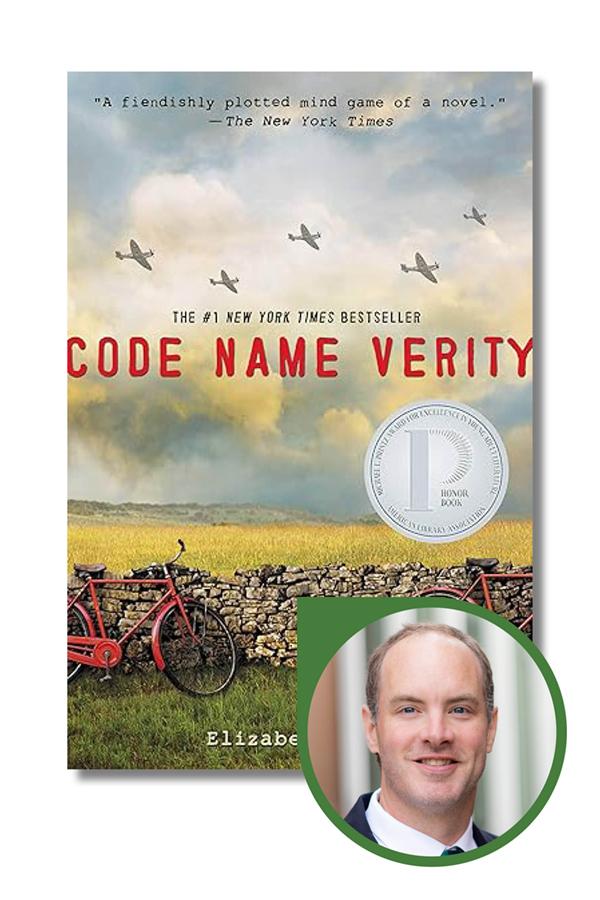
Code Name Verity, by Elizabeth Wein, came out a decade ago now, but I just discovered it this past year. It is a terrific young adult novel about friendship that begins with the capture of a British spy, Verity, in Nazi-occupied France. Told through journal confessions, the amazing backstories of Verity and Maddie, a young pilot, are revealed over time. Although a work of fiction, the author drew heavily on historic sources to ensure these characters were realistic representations of the pioneering women who served in these roles during the war.
Constance E. Helfat
J. Brian Quinn Professor in Technology and Strategy
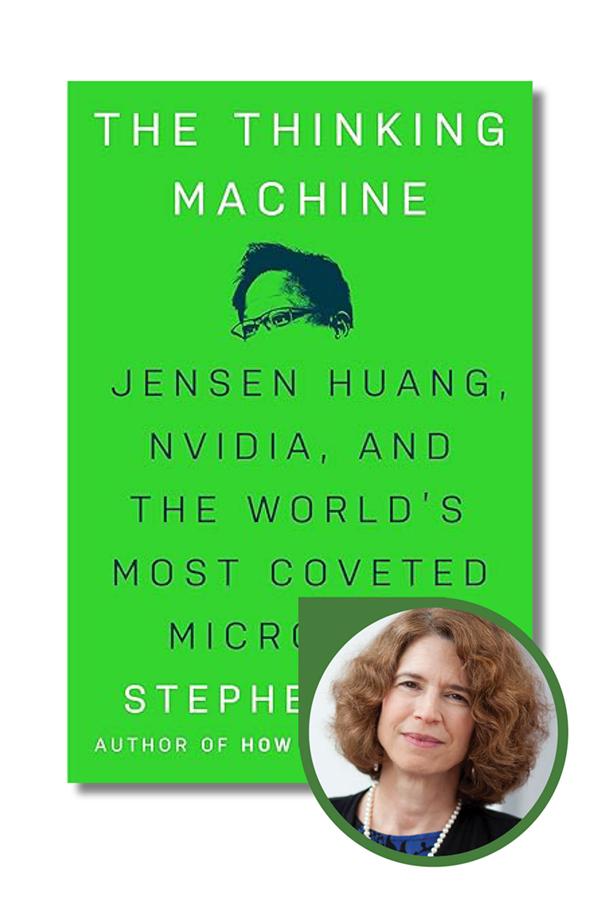
I highly recommend The Thinking Machine: Jensen Huang, Nvidia, and the World’s Most Coveted Microchip. It’s a fascinating biography and an engaging account of the origins and rise of one of the world’s most valuable companies. Author Stephen Witt interviewed many people who played critical roles in Huang’s life and work, beginning with his childhood, and in doing so reveals the roots of—and path to—the success of both Huang and the company he co-founded and still leads today. For anyone interested in what motivates people, as well as entrepreneurship, technology, and business, this is a terrific story.
Scott D. Anthony D’96
Clinical Professor of Business Administration
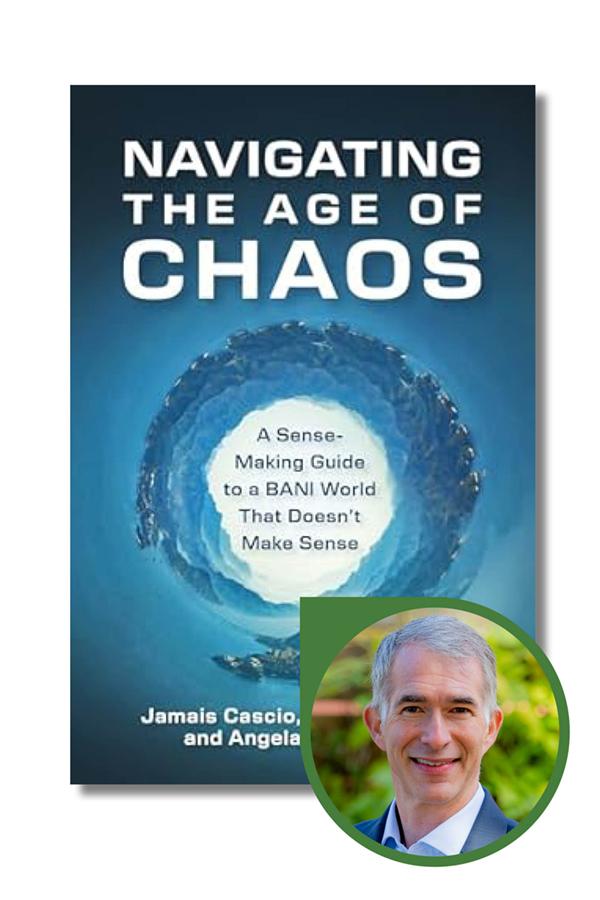
Navigating the Age of Chaos, by Jamais Cascio, Bob Johansen, and Angela F. Williams
The first half of the book reads a bit like a horror story. The authors—two noted futurists and the President and CEO of the United Way—say that we have gone beyond a world that is VUCA (volatile, uncertain, complex, and ambiguous). Instead, they argue we are in a world that is BANI: brittle, anxious, nonlinear, and incomprehensible. The argument rings true and feels downright scary.
The book’s second half talks about positive BANI: bendable, attentive, nimble, and interconnected. Here’s one of just many chestnuts in the book: “A BANI environment is particularly hostile to arrogant ignorance: the certainty that one knows more than one really does, even as the lack of real knowledge undermines any ability to recognize one’s own failings.” Practical. Persuasive. Powerful.

Lindsey J. Leininger
Clinical Professor of Business Administration; Faculty Director, Center for Health Care
Ling Ma’s post-apocalyptic novel Severance has stayed with me since I read it a year ago. A lyrical meditation on topics ranging from corporate culture and urban(e) living to interpersonal relationships and the rise of authoritarian leaders, it offers a messy but beautiful lens on our collective psychological quirks. I found myself repeatedly thinking how much I’d love to hear my Organizational Behavior colleagues’ perspectives on this book! As a bonus, it contains the best fictional portrayal of Chicago I’ve read, capturing a city that is unpretentious yet formidable, built on competence rather than flash, Midwestern to its core while fully at ease on the world stage. As someone who lived in Chicago for sixteen years, I’m admittedly biased, but it’s a beautiful rendering, even if you’ve never called Chicago home.

Kenneth Pucker
Adjunct Professor of Business Administration
The Burning Earth: A History, by Sunil Amrith is a global history showing how humanity’s pursuit of progress and profit has relentlessly exploited and reshaped the planet over centuries. This behavior has led to today’s climate crisis and ecological devastation. The book argues that the illusion of freedom from nature is dangerous and that environmental history is inseparable from human history. It explores themes of empire, resource extraction, warfare, and the profound, often tragic, interdependence between humans and the Earth.

Adam M. Kleinbaum
Professor of Leadership and Organizations
Four years after COVID, the tug of war between the work-from-home and return-to-office camps continues, so my suggestion is In Praise of the Office: The Limits to Hybrid and Remote Work, by Peter Cappelli and Ranya Nehmeh. It cuts through the noise of the remote-work debate with clear evidence about what works and what doesn’t. Drawing on research and practical experience, the authors explain why many hybrid arrangements underperform, despite good intentions and show how in-person work quietly supports learning, coordination, trust, and culture in ways that are hard to replicate virtually.
What makes the book especially valuable is its practical tone. Rather than drawing sweeping (and simplistic) conclusions, the authors help leaders think more carefully about tradeoffs: when flexibility helps, when it hurts, and why vague hybrid policies often satisfy no one. For executives trying to design work arrangements that support performance and people or for individuals deciding when and how often to be in the office, this book provides a smart, grounded place to start.

Emily J. Blanchard
Associate Professor of Business Administration
My pick is The Constitution of Knowledge: A Defense of Truth, by Jonathan Rauch. Rauch offers a powerful defense of the norms and institutions that allow democratic societies to distinguish knowledge from noise: open debate, evidence, falsifiability, and professional integrity. At a moment when expertise is contested and market incentives reward engagement over substance, Rauch’s argument is both bracing and urgent. The book offers a compelling account of institutional failures, while insisting that rigor, empiricism, humility, and good-faith disagreement remain our best tools for a healthy society. It’s a sharp reminder that truth-seeking is essential and worth defending.
As an optional bonus read, I would pair it with Sarah Wynn-Williams’ Careless People: A Cautionary Tale of Power, Greed, and Lost Idealism, which offers a sobering case study in what happens when institutional guardrails fail.

Paul A. Argenti
Professor of Corporate Communication
Land of Desire: Merchants, Power, and the Rise of a New American Culture, by William Leach, is one of the most important books ever written about American capitalism, and one of the most misunderstood. Rather than treating consumer culture as superficial or inevitable, Leach shows how it was deliberately built. Through advertising, department stores, branding, and spectacle, American business helped create a new moral order in which desire itself became virtuous.
What makes this book essential reading today is how contemporary it feels. Leach traces the origins of many tensions we now associate with modern business: the blending of persuasion and manipulation, the reshaping of identity through consumption, and the growing power of corporations to define social norms. Long before social media or influencer culture, firms were learning how to manage attention, aspiration, and trust.
For leaders, Land of Desire offers a historical lens on today’s debates about authenticity, consumer skepticism, and corporate responsibility, as well as a reminder that business has always been a powerful cultural force, not just an economic one.

Sonya Mishra
Assistant Professor of Business Administration; Wei-Chung Bradford Hu T’89 Faculty Fellow
At its core, Airplane Mode: An Irreverent History of Travel, by Shahnaz Habib, is about travel, but not in the glossy, escapist sense. It appealed to both my love of international travel and my interest in examining social inequality. I once saw my U.S. passport as a ticket to freedom, granting the ability to roam endlessly. This book unsettles that assumption by revealing the passport was originally invented as a tool of restriction, one that determines who gets to move freely, who is scrutinized, and who is excluded altogether. This book probes familiar but rarely interrogated dichotomies such as expat versus immigrant and traveler versus tourist. Are these distinctions meaningful, or are they labels we deploy selectively to privilege some forms of movement, and some movers, over others? Ultimately, the book invites readers to rethink travel not as escape, but as a deeply political experience shaped by power, history, and inequality.
You Might Also Like...

How to Connect through Crisis
Feb 12, 2025
Tuck professor Lindsey Leininger shares what nurses can teach business leaders about effective communication.

When Self-Service Backfires: Why Anxious Customers Need Human Reassurance
Jul 02, 2025
New research by Michelle Kinch shows that in high-stakes moments, self-service technology use can erode trust—unless companies design with emotion in mind.